Friday, February 05, 2010

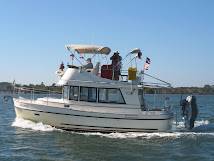
Bachelor Cruise III: Little Harbour


Little Harbour was settled by Randolph W. Johnson, an American sculptor, and his family in the early 1950s.  His son Peter is carrying on with Pete's Pub, art gallery, art workship, and foundry.  Pete's son Greg is also an active artist on site.
Pete's Pub is right on the water.  There are no walls and a sand floor.  The fish sandwiches are fresh and delicious and were swimming yesterday afternoon, if not this morning.  I had lunch there with Erik and Judi from Bravo after we watched a "pour" at the foundry.

Just across the dune from the pub at the end of a boardwalk is the ocean beach.
There are sculptures wherever you look: on the beach, in the dunes, in the trees and bushes.


There is a tremendous variety of artwork in the gallery including bronzes by Randolph, Peter, Greg, and others. On the left is "Everywoman."  "Orpheus and Eurydice" are on the right.


This is the "9 Ages of Man" and "Grief."  I believe that they are all Randolph's.


Peter has done done a whole series of sculptures based on Hemingway's The Old Man and the Sea. 

Methinks I saw this lady swimming in Hopetown Harbour last week but she was all in one piece and had all her extremities.


Actually, I was in Little Harbour twice in this three-week period, but I have put them together in one entry. 

The first time, I got a great tour and personal seminar by the director of the workshop and forge. He was doing the fine work on a wax mold that had been created from a plastic or rubber female mould which had come from an original sculpture modeled in modeling clay much like the clay we played with as kids.

These are rough wax forms which had been poured into the plastic or rubbber molds and have to be cleaned up and perfected.
The wax sculpture is dipped in layers and layers of a liquid silica and sand.  It is then fired in a kiln which vaporizes the wax and turns the mold into hard ceramic. Thus, the name for this centuries old sculpting technique: "The Lost Wax Process."

Here are a bunch of ceramic molds ready for casting with liquid bronze.

I went back a few days later to see the "pouring" of 2,000 degree bronze into the molds which had been reheated in the kiln just before the pouring.

A few hours later, they "crack" the mould.  It's a lot harder than I imagined.  The ceramic has to be chipped away, piece by piece.
The result is a rather rough sculpture which needs extensive polishing, welding, "chasing", and resculpting before it is given a patina and waxed.
Greg is the third generation of Johnston sculptors in Little Harbour.  He and the forge-master performed the pour.

Someone flew in on a seaplane for the festivities and lunch.  I'll bet they had a "Blaster" or two at the Pub also.  (Every bar in Abaco -- and probably the Bahamas -- has its own name for its fruit juice and rum drink.)

Little Harbour is a lovely spot with great protection from all the weather fronts that come through.  It's the furthest south we'll go in the Bahamas.
We'll be back after I pick up The Admiral in Marsh Harbour!

Thursday, February 04, 2010

Bachelor Cruise II: Hopetown

Hopetown is a fairly upscale town on Elbow Cay, a rather long cay just south of Man-O-War.  Its Elbow Reef Lighthouse is visible for miles around.


Sesame was fortunate to grab one of the less expensive moorings (there is no room to anchor in the inner harbor) just inside the entrance and under the lighthouse.

I took a hike up the hill and up the stairs to the top of the lighthouse to look down on the harbor and Sesame at the left-most mooring.

She DOES look rather "cute" from such a distance.

The town (as seen from the mooring) is another Loyalist town, but has lots of color and ginger-breading on its wooden cottages.
There was some interesting activity in the harbor for such a staid community.

The houses are dripping with charm.  Many of them are rentals or "second homes", a staple of the economy here.


There are at least a couple of cemeteries in town.  They have magnificent views of the ocean.  The little stone on the right says,
Effie I. Malone
Died March 5th 1888
Aged 1 year and 6 months
The Angel Called Her

This is a another cemetery immediately above the beautiful beach where I spent an afternoon in the water and reading in my own "cabana" (the nearest neighbors were the residents of the cemetery).  Strangely, in a country with so much beautiful flora, the cemetery plots are usually decorated with old faded plastic flowers.

The beach stretches for miles along the ocean side of the cay.
Everywhere you look is more empty beach.

Vernon's Grocery is one of the two small groceries in town.  Vernon is also a baker, a Justice of the Peace, a "Marriage Officer", the Town Historian, and many other things, I am sure.  His last name is Malone, like so many of the natives.  He is referred to as "Mr. Vernon", since Mr. Malone would would just be confusing. Like the little girl above, he traces his ancestry to the Malones, American Loyalists who landed here in 1785.  The store consists of three short aisles with mostly packaged and hard frozen goods along with some relatively fresh fruit and vegetables depending on when the supply boat last came in.  His bakery (kitchen only) is attached at the side of the store with a separate entrance. The little tags on the shelves are witty sayings, many of which I used to have in my own offices.

Although the town has a number of good restaurants, I found a good hot dog with all the trimmings and an excellent inexpensive ($6.50) conchburger at a little roadside stand across the road from Vernon's.


The Wyannie Malone (remember the last name?) Museum has some interesting displays and is housed on one of the old houses.
One night, (yes, that's a full moon over the cross) Shere Khan, a cappella singers from Princeton University, sang at the Methodist Church.  It was a lovely concert by some fun and very talented kids.  To set the mood, the sun put on a rather nice display as it set over the harbor below us just before we went in to the concert.
 Next stop: Little Harbour and Pete's Pub, Art Gallery, and workshop and forge.

Wednesday, February 03, 2010

Bachelor Cruise I: Man-O-War Cay


I put The Admiral on a plane to Dallas and left that day for Man-O-War Cay, just a few miles across Abaco Sound. As the sign says, there is no place like Man-O-War.

Yes, it has the same glorious sunsets that happen here all over the place.


I found a nice spot to anchor right at the south end of Settlement Harbour where I could watch the comings and goings around the village (aka: settlement).

Man-O-War is unique among the Cays because it has a very active business community, centered on boat building and repair and is not totally dependent on tourism and 2nd home owners like everywhere else in Abaco.  Our friends on Bravo were hauled to replace their broken shaft.  The labor rate is $40/hour as opposed to the $90 or so found in most of the East Coast of the US.


They actively repair and restore older wooden boats like this traditional Bahama sailing dinghy.  They also build modern fiberglass boats, mostly center console outboards.  Since all the yards are owned by Alburies, they are named for the owner's first names.

The cay is virtually (totally?) all white and mostly members of the Albury family for many generations.  Every morning about 4 boatloads of black workers come across from Marsh Harbour at around 7:00 AM and leave by nightfall.  Some of them are highly skilled boat builders and workers.
The Cay is served by two small grocery stores.  The one by the harbor is owned by, of course, an Albury.
Transportation is by gasoline golf carts, some of which are available for rental by the tourists.  Yes, as a former British colony, they drive on the left.

 "Location. Location. Location."  Most of the houses are very well kept and very simple with no decoration.  (This isn't one of them.) It is a very religious community with a number of churches.  BYOB!  No liquor is sold on the cay or served at the two restaurants.
The cay is supplied by an almost daily freight boat and large loads are brought in by barge.  This barge was delivering loads of sand and some heavy equipment.

A little Bahama dinghy sailed through towing a modern fiberglass outboard.  Malolo, a beautiful traditional motor-sailer, was built in MOW in the 50s and was found by her present owners in Maine and restored by them in Nova Scotia.  They returned to MOW for the first time two years ago with great fanfare when we were here and came back this year after more restoration.

Kaye and TJ invited the poor starving bachelor skipper aboard their lovely Alberg 37, Shearwater anchored in the south harbor, for a delicious pork chop dinner.  Sesame brought some fresh-baked brownies.

On the way to the beach at the narrows north of the harbor in the dinghy, I passed through many rays flying around in the beautifully clear water.

 I walked across the narrow isthmus to the ocean side.  At low tide, there is a nice beach on the sound side and I found a few nice shells including a couple of sand dollars.

The coral along the beach had some interesting shapes encased in it.  I am not sure what they are or were, but I'm imagining prehistoric trilobytes or something like that?

During a passage of one of the frequent weather fronts that come through during the winter, one brave soul went out the passage.

Sesame sat happily in Man-O-War for a few days, figuring that every night at anchor saved enough money to buy a rum drink or two ashore.  But then the Captain remembered that he was anchored off a dry town and decided it was time to head out to Hopetown with all the money he had saved.  Stay tuned!

Thursday, January 14, 2010

Across "The Whale"

We wanted to stay in Green Turtle for their modest Junkanoo (sort of a combination of Carnivale and Mardis Gras with an African beat?) on New Year's Day.  We anchored in Black Sound for a few days so that we could walk to New Plymouth for the festivities.

The parade starts with a much bigger than life figure which is articulated and moves to the music of the drums and horns behind it.  Many home-made costumes and dancers follow. The green feathered costume was quite spectacular.  The video below has sound and shows the movement of the costume and some of the other dancers. [Hit the arrow to see and hear it.  Make sure your speakers are on.]
video
That night, we watched the fireworks from our boat back in the harbour.  [A puzzlement for an old English teacher: Since we are in a country which uses British spellings, the accurate spelling is "harbour".  But when it isn't part of a proper noun, how should an American spell it in his narrative?]
We had to wait another couple of days before the waves died down in Whale Passage, a passage from the ocean to the Sea of Abaco past Whale Cay.  It was still a bit "lumpy" when we went by, but we were able to take "Don't Rock Passage" on the inside of the cay where it was fairly quiet.
After Don't Rock we headed toward Marsh Harbour, the largest town in the Abaco islands.  It even has a traffic light!

We anchored near the Marsh Harbour Marina and were treated to a beautiful sunset our first night there.

The weather forecast warned us of yet another cold front approaching with strong winds and rain so we ducked into the marina for a few days.  Dockage was 65-cents a foot per night as opposed to the $2.50 or $3.00 and up they get in much of New England and Florida.  We tried to reserve a slip for just the two nights of the worst weather, but ended up having to sign up for five nights to be guaranteed a spot.  A day later, the marina was full.

We went to the Wednesday "Rib Night" (nothing to write home about, but good) and the Saturday "Steak Night" (still as good as we remembered it from two years ago).
The weather never really turned out to be as bad as forecast, but it was nice being on the dock anyway.  There was a great sunshower with a spectacular rainbow.  Unfortunately, the photographer forgot to bring his polarized filter so it doesn't show up as well as it might.
Josh, the young single-hander who we had been with off and on since West End gave a "seminar" on fish cleaning on the dock.  He had speared the fish under a boat on the dock this time, but had gotten all kinds of fin and shell fish with both hook and line and spear from his dinghy too.
We stayed on the dock one extra day to make it easier for The Admiral to catch her plane to Dallas to help daughter Lyz's family move from their temporary apartment to their brand new house. 

The Skipper is now on a two or three-week "bachelor cruise" and plans to re-explore some of Southern Abaco.  With a little luck, he'll be able to anchor out every night and keep a bit of money in the cruising kitty.

More to follow. . . .

Thursday, December 31, 2009

Christmas in Abaco

We checked the bar room of the Green Turtle Club and found that the North Cove Yacht Club Burgee (that had been put up by a fellow club member whose family owns property on Green Turtle) is still there with the dollar bill we had signed two years ago.
On Christmas Eve morning, one of the cruisers who had a rather modest sailboat at the dock hosted a breakfast for the entire fleet (about 50 people) at the Club.  We all ordered off the menu. 
Santa Claus found the boat overnight and The Admiral found a very modest present under the little tree.
On Christmas Day, Brendal helped to host a big pot luck dinner behind his dive shop which is next to the Green Turtle Club.  Captain John and Sylvia did all the organizing as they apparently have for many years.  They live on a small sailboat in the harbor for the winter and buzz around in a small Boston Whaler.  Captain John runs a tour boat from Dafuskie Island in South Carolina during their "season."
We took the dinghy over to New Plymouth a couple of times to walk around and do some grocery shopping.  It is the only "town" in Green Turtle and has all kinds of really authentic charm.  We shop at Sid's(now run by his son Scott and his daughter -- Sid's widow often sits on a small couch at the door and greet everyone as they come in and leave), which is the best of the 4 or 5 little grocery stores in town.  (I have no idea how they support all those stores, but they were all there two years ago and probably for many years before.)  The town was founded by Loyalists from New York whose lives were getting rather unpleasant in the years following the Revolutionary War.  There's a great little museum run by a woman who looks old enought to be one of the original settlers and has wonderful stories to tell.

Back at the anchorage in White Sound, we saw some lovely sunsets and sunrises undisturbed by shore lights and air pollution.  It seemed that every other boat was from Nova Scotia and many of them flew their provincial flag with pride along with the Canadian national ensign and the Bahamian courtesy flag.

A young single-hander who we had first seen at West End did very well with his spear and fishing pole!
We took a couple of days to go a few miles north to Manjack (aka: Munjack or Nunjack) Cay, one of our favorite anchorages two years ago.  We started off at the northern anchorage which we hadn't been to before and walked across to the ocean side.

Apparently, some developer put up a pavilion which various people have turned into a kind of "signing tree", putting their names on all kinds of flotsam and jetsam and hanging it up.  They have also made large piles of the tremendous amount of jetsam that has washed up on the beach by way of waves and current -- almost all of which is plastic junk.

We dinghied around the northern point to discover the new house of a guy we had met a couple of years ago.  We had seen his little Compac sailboat in Black Sound and were told that he was "off Island" for a couple of weeks.
Then back to the main anchorage off the house of Bill and Leslie who provide free WiFi to those who anchor off their beach.  They also welcome anyone ashore and ask only that guest either help collect and pile up junk from the shore or even take it back to someplace where it can be dumped.
The Skipper explored the creeks that wind through the mangrove swamps at the end of the cay and saw an example of new mangroves seeding themselves along the way.
On the way back he stopped to see the Wharram-designed catamaran Peace which we had talked to a couple of times down the ICW and was invited aboard for a cup of tea and good conversation with Ann and Neville.  They are tucked away in a corner between Manjack and Crab Cays and stay there for most of the winter.

After a night at Manjack, we headed back to Green Turtle, this time going down to Black Sound to test our new anchor in the bad holding ground.  Our new friends aboard Sheena II (a neat ferro-cement trawler from Canada), Mike and Sue, got a good deal on dockage at Donney's Boat Rental Dock.

Those of us who wake up early enough got the great treat of seeing the almost-full moon setting just a few minutes before sunrise.

Today, New Years Eve, we will walk to the beach and do some shelling before we dinghy over to a BYO cocktail party back at Brendal's in White Sound.  The weather is supposed to be poor for the Junkanoo in New Plymouth tomorrow, but we will be able to get there by either sea or by land from here.

HAPPY NEW YEAR!


Saturday, December 26, 2009

Bahamas!

We diddled around between Lake Sylvia in Fort Lauderdale and the anchorage between Florida International University and Oleta State Park in North Miami for a few days as new weather fronts seemed to pass through every other day.  We finally decided to cross from Fort Lauderdale (Franz and Louise dinghied up from their slip in Hollywood to wish us a safe voyage) on the second day of a two-day window.  It wasn't a great crossing, but it wasn't bad and we got into West End on Grand Bahama Island at 2:15 PM on December 15 after leaving Lake Sylvia at 7:00 AM.

We saw a couple of cruise boats heading toward Nassau and crossed paths with a car carrier which was riding the Gulf Stream north.
The Admiral often complains that the boat is too small so, to accomodate her, the marina at West End charged us as if we were 40 feet long (their "minimum").  They also have hefty mandatory surcharges for electical hookup and water use.  At least "free" WiFi comes with all this money, so we could communicate with everyone through email or Skype and get some good forecasts to cover the next 2 or 3 days when we knew we would be in a communications blackout until we got to Manjack or Green Turtle Cay.  NOT!  No WiFi and they seemed unconcerned about it.  So we settled for a print-out of a forecast from an unnamed source from the dock office.  It indicated that we would have a good trip to Great Sale the next day but would have to continue on the next day in somewhat questionable weather as the wind clocked around.  There was a lot of discussion around the docks about where to go since staying at West End could turn into at least a week's stay at very high prices.

We had a very quiet trip to Great Sale the next day.  It is a totally deserted island in the middle of nowhere, but about half-way between West End and the cays ("keees") of Abaco.  After a quiet night, we left in an increasing breeze with the intent of going to Green Turtle Cay and a night at the Green Turtle Club dock followed by some time at anchor in the harbors of Green Turtle.

The weather gods were not at all cooperative and we ended up beating into major head winds and seas that broke completely over the bridge (the skipper, needless to say, was operating from the lower helm station).  [Note that cruising blogs rarely show photographs of this kind of weather since the photographer is hanging on for dear life and doesn't even want to open a porthole for fear of drowning the camera to say nothing of himself!]  After about five hours of this, the skipper aborted the voyage at Allans-Pensacola Cay and found a relatively peaceful anchorage with four other power boats. 

The weather did not seem to abate much over the night, but we saw the other boats begin to weigh anchor and move around late the next morning.  A VHF radio call to Coco Nut revealed that they had gotten a forecast that the wind was going to swing around again before night, making our anchorage untenable.  The only option was to head on to Green Turtle in what we thought would be equally horrendous conditions as the day before.  Thankfully, it ended up being a much easier passage and we took the last slip in the marina in the middle of a downpour.

We ended up spending three nights on the dock.  There is a special "deal" that lets you eat meals at the restaurant and take the meal bill off the dockage fee.  It isn't cheap, by any means, and you tend to overeat for a few days! The Admiral bummed a golf cart ride into town with the owners of the boat in the next slip who were there for the entire winter and did a little shopping. 

After three days, we moved out to try the new anchor in the harbor and wait for the potluck dinner on Christmas Day.

We later discovered that a number of other boats had left West End the same day we did largely because of the expense they would incur if they were weathered in for a few days.  They went down to Lucaya/Freeport and stayed in slips for a fraction of the price until the weather cleared up a bit  and came back around a few days later.  We are all now together in White Sound, Green Turtle Cay, Abaco.

We hope you all had a Happy Christmas!
Happy New Year to Everyone!

To be continued when we have a better WiFi connection.

Tuesday, December 08, 2009

South From Vero


The Thanksgiving potluck at the park in Vero Beach was quite festive and there seemed to be plenty of food to go around including the small turkey and dressing and gravy that we managed to cook in our tiny galley.  We sat with our mooring mates, Franz and Louise, and other folks we had met along the way.

Franz had tried to teach me how to fish to no avail, but he gave me a catfish to use as bait in my crab trap.  My first (and only) catch was a barely legal blue crab which I steamed the next morning and awarded the claws to Franz.  It was quite tasty.

We had a rather spectacular sunrise one morning at Vero.


One boat came in with most of his mast missing and the highly experienced owner said that it broke on a calm day just off an inlet.
We spent some leisure time setting the boat up for the holidays with bows and wreaths and lights from the Dollar Store.  I have enhanced the lights with PhotoShop since they did not photograph well. The little lights are LED and are powered by their own solar cells and batteries.  They come on automatically at dusk.
The full moon one night was quite beautiful and reminded me of the song from The Fantasticks. (This photo is not PhotoShopped.)

When we finally headed south from "Velcro Beach" (I think Jimmy Buffet might have come up with the name because you tend to "stick" there because it is so well set up for the cruisers), we ran past all kinds of interesting boats including what looked like a matched pair of Elcos.


We spent a couple of nights in North Lake Worth as many thunderstorms came through.  Erik and Judith on Bravo were anchored nearby.
More interesting boats popped up as we went by the Lake Worth Inlet and Palm Beach. The one on the right is the Bounty.

These kids wanted to show us the fish they caught -- or were they just rubbing it in that the Skipper was still "fishless"?
We ran by Lighthouse Point where we had spent some good times with the Bodens and watched the busy traffic at Hillsboro Inlet.  There are many inlets, but few really "safe" ones.  The smaller ones are labelled "used by locals and fishermen" in the guides.  In other words, you have got to be nuts if you go through this inlet in anything but absolutely perfectly calm conditions with no tide or current and have a native Floridian (about 1% of the population) guide with you.

THE SOCIALIZATION OF MANATEES

Once you get into South Florida, there are all kinds of "Manatee Zones", restricting boat movement in one way or another.  In truth, boats with their propellers can be fatal to the once-endangered manatees, but the reality is a bit more political, methinks.

Note that the "Summer Manatees" must be more agile than the winter ones, since they apparently can avoid boats going 5 MPH faster. Note also that few people live in their winter cottages along the shore in summer.


We have noticed in the past that manatees are upwardly mobile socially and tend to hang out off the very expensive mega-mansions and condos of the super-rich.  There are far more manatee speed restrictions in these areas than off trailer parks and undeveloped land.  (I refuse to believe that politics or payoffs would have had anything to do with these designations for the betterment of these lovely Rubenesque mammals.)

As upwardly mobile as these animals may be, there are still some areas where they can only afford to go on winter weekends.  I haven't yet read the research that shows how they learned to read calendars and clocks, but I am delighted that some government grant or other was able to furnish them the opportunity.

Some new signs are beginning to show up that weren't in evidence two years ago.  Do they signify a little less corruption in government and government-appointed employees or the simple fact that scientific research has shown that manatees are no longer endangered and that they better find another way to restrict the speed of boats off rich people's winter homes?  Next year, we expect that all the manatee signs will be replaced with ones that read:

FILTHY RICH PEOPLE HABITAT
Anyone throwing a wake of any sort
will be shot.

We finally found Fort Lauderdale, dubbed "Fort Liquordale" by many racing sailors.  It is wall-to-wall boats of every size and description.  Every house is on a man-made canal with its own boat dock.  The land the houses sit on was created from the dredging spoils from the creation of these canals.

This is definitely the land of, "Mine is bigger and better than yours!"  You build a multi-million dollar two or three story winter cottage on the landfill (usually only 2-3 feet above sea level) that goes for $6,000,000 for a canal-front or ICW front lot.  Then you put your 4 story mega-yacht on the dock in front of it so you can't see the water!

We went past the Los Olas City Marina where we had stopped a couple of times before and saw a sister ship in one of the slips.  The Water Taxi is a great tour as well as a great way to get around the city.

Bahia Mar is supposed to be the biggest marina in the world or something like that.  There is no question that it has an impressive array of huge motor yachts, with hail ports like the Cayman Islands and other places where the owners can avoid taxes, which never seem to leave the dock.  They do, however, provide employment for the armies of crew and boat cleaners who religiously wash the boats down every day in a state which has signs all over the place to "Conserve Water."


We anchored in Lake Sylvia, just beyond Bahia Mar and quite close to Port Everglades Inlet as the crow flies.  Note the departing cruise ship in the background on the left.

The plan is to hang around here and maybe North Miami (a nice harbor only 14 miles away) until a "weather window" opens up for the passage across to West End and the Abacos.  We will leave from Port Everglades (Fort Lauderdale) when and if the window comes.

With a little luck, the next chapter of this "Saga" will come from somewhere on the other side!

Wednesday, November 25, 2009

Northern Florida

We made some cell phone calls to try to track down spark plugs for our sick outboard as we went from Georgia to Florida and past Fernandina. They claim that the shrimp business really started there.  They also have two big paper plants which belch rather aromatic smoke which the locals call "the smell of money."  We have never stopped there and hope to in the future.  Apparently the old town has a great deal of charm, largely because Flagler's railroad completely bypassed it.

  We finally raised someone at Amelia Island Yacht Basin who said he would track them down one way or another.  When he asked for my name so he could call back, he immediately said, "I'll bet you own a Camano Troll!"  It turns out we had been in communication with Tom and Gerrie Clare two years before when we were heading south and they were finishing up the Great Loop on a sister ship.  We ended up waving to each other as we passed going in opposite directions just south of St Augustine.  (See our December 2007 blog.)


Tom now works part-time at the marina where he has a slip for the boat.  He found the spark plugs for us at the local NAPA, offered us a discounted slip for the night at the marina next to his boat, took us shopping, took us home to his wife for a gourmet dinner and good conversation, and sent us back to the boat with some delicious home-made frozen lasagna.  It was a delightful day and evening and we thank them both for putting up with us boat orphans.


We waited for a while the next morning since we had a pea soup fog worthy of Maine in July.  We felt our way down the ICW for a while, but it cleared by the time we got to the busy St. Johns River junction. 

We pushed on through to Saint Augustine, one of our favorite cities but one of our least favorite anchorages because of strong currents and opposing winds.


We paid our $10 to park the dinghy at the Municipal Marina and made like tourists both on foot and on the Trolley Tour.  Saint Augustine purports to be the oldest continuous European settlement in America and is really quite beautiful with a very strong Spanish history, as well as French and English and, of course, American.

One of the streets is canopied by "live oaks" which are hundreds of years old.  The trolley also took us over to the beach and the lighthouse.  We didn't walk up to the top of the lighthouse, but we did watch some surfers at the fishing pier for a while.

Back at the anchorage, we discovered that Summertime from our home port and one of our clubs had dropped her hook nearby.  We left fairly early the next morning and looked back at the progress being made on the multi-year reconstruction of the historic Bridge of Lions.

The Art of the Slow Pass


When you are in a sailboat or a slow powerboat, one of the most unnerving sights is to see a large sportsfisherman coming in either direction at full speed, pulling a HUGE wake.  If he continues his course and speed he will, at the very least, create great discomfort aboard the slower boat and, at worst, create some real damage and personal injury with his wake.


ICW etiquette demands that the slower boat slow down even further so that the faster boat can slow down enough to throw a much smaller wake but still get by without taking all day.  If the faster boat is passing from astern, the slower boat moves in behind it as quickly as possible after the "slow pass" and both resume their normal speeds.  If they are passing in opposite directions, both slow so that they are throwing smaller wakes and they angle across each other's wake and resume speed. If the faster boat does NOT slow down after the slow boat has significantly reduced her speed, MAJOR problems can occur since the slower boat has reduced its ability to steer at idle speed and can be left to wallow helplessly in the swells left by the jerk who, rumor has it, compensates for deficiencies in his own manhood with a heavy-handed throttle.  Sometimes the slow pass is preceded by a radio call on VHF Channel 16 or horn signals, but usually eye contact or a wave and an obvious speed change is sufficient.
[END OF LESSON FOR TODAY.]

After Saint Augustine, we passed Fort Matanzas, the scene of the final annihilation of the last 300 Frenchmen in that part of Florida by the victorious Spaniards.  The fort was built later and never saw action, but supposedly discouraged invasions through the Matanzas Inlet.


We spent the night at anchor in Rockhouse Creek, just inside the Ponce de Leon inlet north of New Smyrna.  It's a fun dinghy ride out to the inlet past all the shoals. We had passed an old friend from home aboard Nomad who has been doing this trip every year for something like 24 years.  They anchored near us for two nights.

Florida is constantly building new canals into which they can put their yachts and new land from the sand dredged up from the ICW channels onto which they can put their mega-mansions and condos.  It seems like one big Disneyland for wealthy adults at times.


Along the cut canals are more modest homes, some with very creative boat houses at the ends of their short docks.  Elsewhere, there are true "house" boats beside the channel.

The route south took us through the Haulover Canal and past NASA's huge assembly building across from Titusville.  We missed a shuttle launch by about a week.
We passed friends of my brother's in Peace who we had seen in Abaco two years ago and who said they were heading there again this year. About six ominous looking go-fast boats from US Customs and Immigration were involved in some kind of simulation as we were going by.  Note the masks or whatever they are wearing.

Even the pros have problems.  This was a pushboat and large barge with large concrete beams aboard which apparently ran aground in the ICW at close to high tide.
There are all kinds of islands along the dredged portions of the ICW which were made from the dredging spoils.  Over the years, they have been seeded by wind and tides and birds and have become their own complete ecosystems.

Our goal was the Vero Beach City Marina where we are rafted with some other boats on a mooring, will use the free shuttle bus to go shopping, and share a Thanksgiving potluck dinner with over 100 other boaters from the moorings and docks -- the great majority being "snowbirds" like us on their way further south for the winter.


Charleston, SC to Florida

Once we were sure Sesame was safely tied up and plugged in, we rented a car to drive south to Kissimme, Florida to see our daughter Lyz and her family just before they moved to Dallas for Chris's new job.

We got to play with the grandsons, Matthew (4 months) and Mikey (3 years).
"Poppie" got to take Mikey and Matthew out trick or treating.  Mikey was Woody, from Toy Story, riding his horse Bullseye(?).  Matthew was either a dragon or a lizard, take your pick.


After a relatively chaotic week getting Chris to pack the SUV with everything they would need to live for at least 2 months in the temporary apartment in Dallas that would be their home until their new MacMansion is finished, we saw him off on Friday for his 2-day drive with the "stuff" and the dog.  Two days later we put Lyz and the boys on the plane for Dallas and drove back to Charleston. We left the house pretty much "as is" for the professional movers to take care of since they are being paid by Chris's new employer.

As we walked the Megadock at the Municipal Marina, we discovered that we had namesake boats docked on either side of the pier.
We spent a couple of days shopping and being tourists since we had the expensive luxury of a slip with electricity (= airconditioning and heating!).
We toured one of the oldest town houses in the city and had lunch at a seafood joint where the waitresses wore interesting shirts.

We did some browsing and Christmas shopping at The Market.  (Guess who gets the sweet grass basket?) The Market is a string of roofed open-air shops just behind the original slave market which is now a museum.
We were treated to a beautiful sunset over the anchorage one night.

We were anxious to get going again after a few days of bad weather and took a last quick tour around the marina which hosted a huge variety of boats from our little 28-footer


to The Sublime
and The Ridiculous


We left Charleston and headed south through many opening bridges, all of which we had to wait for on our first trip down the ICW on our Nonsuch 30 sailboat with its 54' mast.  Now we only have a 14' "air draft" and are able to sneak through a lot of the bridges while they are closed.
Along the way, we saw a lot of dashed dreams, aka: boats that could be bought cheap!
Most of them were "water stored".
In the same areas there were some fairly impressive "winter cottages".

The "riparian rights" around here seem to guarantee everyone the right to build a dock to the edge of navigable water and everyone seems to take advantage of it, no matter how long the dock.  And they don't share! Each and every house has its own dock, some of which I swear are a mile long!
More modest houses celebrate the few "forested" clumps of land in the middle of the marshes.  The only visible access is through many miles of winding creeks between the house and the mainland.
As we got into Georgia, we passed the Bonaventure Cemetery made famous by the book and movie The Garden of Good and Evil. We also passed Moon River which was actually named after the song rather than vice versa.
There is a steady stream of "snowbirders" on their way south. Sometimes, one misses a turn and has to wait for BoatUS, Tow Boat, or a tide change.

We passed the Jekyll Island Hotel, the winter home of the mega-rich in the 20s and 30s, now owned by the state but still open to the public as a combination luxury hotel-museum-restaurant.  We stayed at the dock in the foreground on our first trip south in our sailboat, but there is no longer any water there.

Our last stop in Georgia was Cumberland Island, another home of the rich and famous until the Germans scared then all away in the 1940s with their U-boats.  The skipper had planned to spend a day ashore and maybe even take a swim in the ocean on the far side, but the dinghy engine failed to start and we had no replacement spark plugs, so we decided to head on to Florida.

Saturday, October 31, 2009

The Dismal Swamp to Charleston, SC

We were the first one down the road in the misty morning, heading for the first lock-through at 8:30 AM at the far end of the canal on our way to Elizabeth City.

We went under the double bridge that leads into Elizabeth City and docked at the free dock downtown.  After we did a little organizing on the boat, we hired a cab to take the Skipper to the hospital for a scheduled blood test and the Admiral to the market for a little grocery shopping.  We met back at the boat and used our new cart to drag the laundry a few blocks to the laundromat.  The Admiral went back to the boat while the Skipper stopped briefly at the Rose Buddies' wine party on the dock, a tradition started many years ago by some gentlemen in the town to welcome transient boaters.  It was such a busy day, that I forgot to take pictures!

Our next anchorage was Dowry Creek, just past the marina there.  The next morning was pretty spectacular as mornings often are when you get up early enough to see them.  We were now in a rush to get all the way to Charleston, SC before we left the boat to go to Kissimmee because the entire Intracoastal Waterway was scheduled to be closed on either November 10 or 13 for 10 days for the replacement of the Ben Sawyer Bridge.  We didn't want to be caught on the wrong side of the closure when we came back from Florida because there are not very many nice and/or inexpensive places to stay for that long just north of Charleston and the way around the outside (out in the ocean) was long and totally dependent on good weather.

So we pushed on to Oriental, one of our favorite places and made a reservation for two nights at the Oriental Marina to wait out another wind storm before we crossed the Neuse River again.  Our slip was right across from "The Bean", a great coffee shop with a lot off locals sitting on the porch judging one's docking skills. 

Our timing was perfect because there was a barbecue and apple pie contest the second night we were there for only $10/person.  The proceeds went to charity so we felt we were making a major contribution to humanity by chowing down on pork barbecue, beans, coleslaw, and apple pie -- despite our diets.


The weather was good enough the next day for a long trip down the Waterway past Beaufort (Bow-fort) and Morehead City, through Bogue Sound, past Swansboro and into the middle of the U.S. Marines major training ground.  Mile Hammock is an excellent harbor, but no one is allowed to set foot ashore.  There were a number of boats anchored there and we anchored right next to the old hulk of a landing craft they use for training.

Off again the next morning for our another marathon trip past the Surf City Bridge and the Topsails.  We had intended to stop at Carolina Beach but we made the decision to push on through and head down the aptly named Cape Fear River in less than perfect conditions.  Luckily, the wind abated and the tide turned just as we started down and we had a very pleasant trip to an anchorage called The Pipeline in Southport.

Another extended long trip in the effort to get to Charleston in time to see our daughter and her family off took us through the marvelous old pontoon bridge and the border between North and South Carolina at the Calabash river. 

We went by Barefoot Landing which used to be a free dock near a shopping and entertainment complex in Myrtle Beach but is now an inexpensive facility with a few amenities.  We saw what looks like a real lighthouse outside Coquina Harbor, but there is certainly no navigational purpose for it alongside a man made ditch at the entrance of a man-made harbor.  A mystery to be researched later?

Myrtle Beach is wall-to-wall golf courses.  One has a parking lot on one side of the ICW and the course on the other.  The golfers take an aerial tramway across.

Every other condo complex seems to have a golf course for its front yard.  It seems as if there are more golf holes that there are people to aim little balls at them!


We came down the beautiful Waccamaw River past Osprey Marina where we had stayed a couple of times. There is a little anchorage with some houseboats (some sunk) just before Bucksport, which seems to have come back from the dead -- at least for the moment.

We went just a few more miles down the river and anchored in Bull Creek, just beyond the north end of Prince Creek.

We continued down the Waccamaw River and made a quick stop at Georgetown for fuel and fresh shrimp at the shrimp dock. We went across Winyah Bay which includes the inlet that we would have to take if we had to detour around the ICW closing.  Thank goodness, we were now on a schedule that would get us past the problem in time! 

We bypassed McClellanville, which sounds like an interesting stop and pulled into Awendaw Creek which is actually a very shallow inlet from the ocean. 
One of the boats coming in off the ocean pulled alongside and asked if we would like some blue crabs.  The answer, of course, was an enthusiastic affirmative and he passed a large plastic box across which the Skipper emptied into the largest bucket aboard.  There were so many that they overflowed onto the cockpit and the skipper's bare feet.  A very lively dance ensued followed by the donning of shoes and the capture of many errant and combative crabs.  They were soon subdued and put into the large crab and lobster pot we always carry which resulted in a much quieter -- and tastier -- passle of crabs.  After an exhausting evening picking crabs, the Skipper fell into his bunk for a refreshing sleep and sweet dreams.  The next morning returned the favor with another gorgeous sunrise over the ocean.

On the way to Awendaw, we had gotten a report that the ICW closure was postponed to the end of November!  We were tempted to turn back and take the boat back to leave her at the Osprey Marina at about half the price of the Charleston City Marina where we now had reservations.  But we pressed on since we were now only half a day from Charleston.  As we passed the bridge, it was quite apparent that it wasn't close to be ready for the final installation of a new bridge.

We were given a very nice inside slip at Charleston City Marina where the boat will be for a couple of weeks while we drive a rental car to visit our daughter and her family in Kissimmee, Florida until we put them on a plane for Dallas on the 7th.  We left a jack-o-lantern on the bow to protect Sesame while we are gone.  It has a solar charged light which should turn on every night automatically and scare any miscreants away.

HAPPY HALLOWEEN!